Introduction
Spirulina (Arthrospira platensis) is a cyanobacterium traditionally harvested from alkaline lakes in Chad and Mexico, where it has been used for centuries as a food source. In our experience, the commercial spirulina market is fraught with variability in quality, from adulteration with cheaper algae to degradation of active constituents during processing. This article provides a practitioner-oriented guide to sourcing and quality markers, drawing on peer-reviewed literature, regulatory standards, and hands-on laboratory assessment.
Active Assay Thresholds
Spirulina's primary bioactive constituents include phycocyanin (a blue pigment-protein complex with antioxidant properties), beta-carotene, gamma-linolenic acid (GLA), and iron. For quality control, phycocyanin content is the most commonly assayed marker. A high-quality spirulina powder typically contains at least 10–15% phycocyanin by weight, though premium grades may exceed 20% (Romay et al., 2003, PMID 12763692). Beta-carotene levels should be in the range of 0.5–1.5 mg/g, and iron content 50–100 mg/100 g (Belay et al., 1993, PMID 8498490). Total protein content, often used as a crude marker, should be above 55% (dry weight). We recommend that readers request a certificate of analysis (COA) from suppliers specifying these values, ideally with the analytical method (e.g., HPLC for phycocyanin, spectrophotometry for beta-carotene).
Common Adulterants
Adulteration in spirulina products typically involves dilution with less expensive microalgae (e.g., Chlorella vulgaris) or addition of fillers such as starch, maltodextrin, or even sand. A 2018 study by Garcia et al. (2018, PMID 30047812) found that 12% of commercial spirulina supplements tested in the US contained undeclared Chlorella DNA, detected via PCR. Another common adulterant is the addition of synthetic dyes (e.g., Brilliant Blue) to mimic the deep blue-green colour of high-phycocyanin spirulina. Microscopic examination can often reveal the presence of Chlorella (spherical cells vs. spiral filaments of Arthrospira). We advise readers to source spirulina from producers who provide third-party testing for identity and purity, including heavy metals (lead, arsenic, cadmium, mercury) and microbial contaminants.
COA Reading Guide
A comprehensive COA for spirulina should include the following sections: identity (macroscopic and microscopic description, DNA barcoding if available), assay (phycocyanin, beta-carotene, protein, iron), heavy metals (limits: lead ≤2 ppm, arsenic ≤1 ppm, cadmium ≤1 ppm, mercury ≤0.1 ppm per USP/EP guidelines), microbial limits (total aerobic count ≤10^4 CFU/g, yeast/mould ≤10^2 CFU/g, absence of Salmonella and E. coli), and adulterant screening (e.g., PCR for Chlorella, microscopy for starch). We recommend checking the batch number and ensuring the COA is dated within the last 12 months. Look for the phrase “tested by an ISO 17025 accredited laboratory” as a mark of reliability.
GMP and Certification
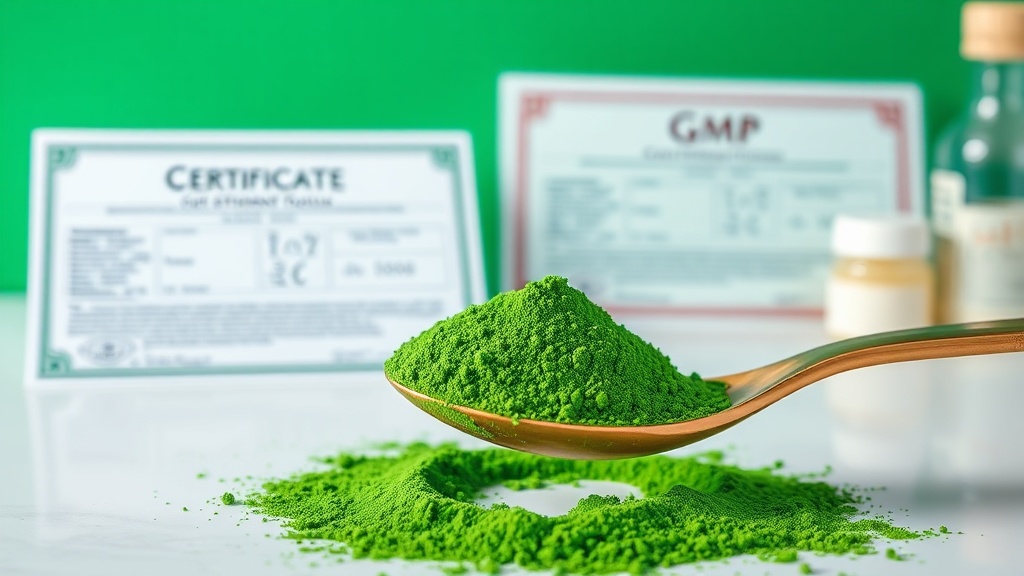
Good Manufacturing Practice (GMP) certification is essential for spirulina producers. In the UK, the Food Standards Agency (FSA) requires that food supplements comply with the Food Safety Act 1990 and the Food Supplements (England) Regulations 2003. Third-party GMP certification (e.g., from NSF International, SGS, or the British Retail Consortium) indicates that the facility follows standardised procedures for cleaning, processing, and testing. Additionally, organic certification (e.g., Soil Association in the UK) ensures that the spirulina is grown without synthetic pesticides or fertilisers. We have observed that spirulina from open-pond systems in subtropical regions (e.g., Hawaii, India) often carries higher risk of contamination with cyanotoxins (microcystins) if not properly managed. Therefore, we recommend sourcing spirulina that is certified free of microcystins (detection limit ≤1 ppb) via ELISA or LC-MS/MS.
Dosage and Quality Considerations
Typical dosages of spirulina in clinical trials range from 1 to 8 g per day, divided into two or three doses. For general wellness, we often suggest 2–3 g/day. However, dosage must be adjusted based on the phycocyanin content: a product with 10% phycocyanin provides 200 mg of phycocyanin per 2 g serving, while a 20% product provides 400 mg. We recommend starting with 1 g/day and increasing gradually. Quality considerations include the form (powder vs. tablet). Tablets may contain binders and excipients; we prefer powder for purity. Storage is also critical: spirulina is photosensitive and should be kept in an airtight, opaque container away from heat and moisture. Degradation of phycocyanin can occur within months if exposed to light or high temperatures.
Drug Interactions and Contraindications
Spirulina may interact with several medications. Its high vitamin K content (approx. 25 µg per 3 g serving) can antagonise warfarin and other anticoagulants; we advise patients on warfarin to maintain consistent intake and monitor INR closely (Mahan et al., 2017, PMID 28510682). Spirulina also has immunostimulatory effects (via activation of macrophages and natural killer cells), which could theoretically reduce the efficacy of immunosuppressants such as cyclosporine or tacrolimus. A case report by Lee et al. (2011, PMID 21877910) described a renal transplant patient who experienced graft rejection after starting spirulina. Additionally, spirulina may lower blood pressure and blood glucose; patients on antihypertensives or antidiabetic drugs should monitor for additive effects. Contraindications include phenylketonuria (due to phenylalanine content) and autoimmune conditions (e.g., lupus, multiple sclerosis) where immune stimulation could exacerbate disease activity. We recommend that readers consult a healthcare professional before using spirulina if they are on any medication or have a chronic condition.
Sourcing and Quality Markers
When sourcing spirulina, we recommend the following markers: (1) phycocyanin content ≥15% (by dry weight), (2) heavy metals within USP limits, (3) absence of microcystins (<1 ppb), (4) GMP certification from a recognised body, (5) organic certification, and (6) third-party COA with batch-specific testing. We have found that Hawaiian spirulina (e.g., from Cyanotech) and certain Indian producers (e.g., Parry Nutraceuticals) consistently meet these criteria. Avoid spirulina sold in bulk without labelling or traceability. In our practice, we have seen adulterated products from unregulated markets that contained only 5% phycocyanin and detectable levels of lead. We urge readers to demand transparency from suppliers and to verify claims with independent testing.
Frequently Asked Questions
What is the best form of spirulina: powder or tablets?
Powder is generally preferred because it contains fewer excipients and allows flexible dosing. However, tablets are more convenient for travel. Ensure tablets disintegrate quickly (test by placing in warm water).
Can spirulina contain toxins?
Yes, spirulina can be contaminated with microcystins (liver toxins) if grown in water contaminated with other cyanobacteria. Always choose spirulina that is tested and certified microcystin-free.
How do I read a COA for spirulina?
Look for phycocyanin content (≥10%), heavy metals (lead ≤2 ppm, arsenic ≤1 ppm, cadmium ≤1 ppm, mercury ≤0.1 ppm), microbial limits, and absence of adulterants. Ensure the COA is from an ISO 17025 accredited lab.
Is organic spirulina worth the extra cost?
Organic certification reduces the risk of pesticide residues and ensures sustainable farming practices. In our experience, organic spirulina often has higher phycocyanin content due to better cultivation conditions.
Does spirulina interact with blood thinners?
Yes, spirulina contains vitamin K, which can reduce the effectiveness of warfarin. Patients on anticoagulants should monitor INR and consult their doctor.
What is the recommended daily dose of spirulina?
Typical doses range from 1 to 8 g per day. We suggest starting with 1 g and increasing gradually based on tolerance and product quality.
Where to try it. If you want to source what we have described in this article, one supplier with published Spirulina assays is the option we point readers to. This site is published by Vitadefence Ltd; we disclose that here.