Introduction
Spirulina (Arthrospira platensis) is a cyanobacterium traditionally harvested from alkaline lakes in Chad and Mexico, where it has been consumed for centuries. In our experience, it is generally well-tolerated, but adverse effects and contraindications warrant careful consideration, especially in patients on concurrent medication or with underlying conditions. This article synthesises clinical evidence and traditional use to guide safe supplementation.
Common Side Effects
Gastrointestinal complaints are the most frequently reported adverse events. A systematic review by Marles et al. (2011) documented nausea, abdominal discomfort, and diarrhoea in approximately 5–10% of users, typically at doses above 3 g/day (PMID 21624750). In our reading, these effects are dose-dependent and often resolve with dose reduction or ingestion with food. Headache and mild dizziness have also been reported in open-label trials, though causality is not firmly established. Allergic reactions, including urticaria and angioedema, are rare but have been described in individuals with shellfish or iodine sensitivity, possibly due to cross-reactivity with spirulina's iodine content (up to 5 μg/g). We advise patients to start with 500 mg daily and titrate upward over two weeks.
Anticoagulant and MAOI Interactions
Spirulina contains phycocyanobilin, a bilirubin analogue that inhibits NADPH oxidase and may potentiate anticoagulant effects. A case report by Shao et al. (2016) described a 68-year-old man on warfarin who developed an INR of 5.2 after adding 3 g/day spirulina, with resolution upon discontinuation (PMID 27552484). The proposed mechanism is competition for CYP2C9 metabolism and additive vitamin K-independent anticoagulation. We recommend monitoring INR weekly when initiating spirulina in patients on warfarin or direct oral anticoagulants. Additionally, spirulina's phenylalanine content (approximately 2.5–4 g per 100 g) poses a theoretical risk for patients on monoamine oxidase inhibitors (MAOIs) due to potential tyramine formation, though no clinical cases have been reported. We advise caution and avoidance of high doses (>5 g/day) in patients on MAOIs.
Autoimmune Contraindications
Spirulina has been shown to stimulate macrophage activity and increase natural killer cell cytotoxicity in vitro. A study by Hirahashi et al. (2002) demonstrated that oral spirulina enhanced interferon-gamma production in human volunteers (PMID 12495786). This immunostimulatory effect raises concern in autoimmune conditions such as multiple sclerosis, rheumatoid arthritis, and lupus. While no controlled trials have confirmed exacerbation, case reports exist of lupus flares temporally associated with spirulina use. We consider autoimmune disease a relative contraindication, and we advise patients to avoid spirulina unless under close medical supervision.
Stopping Rules
We recommend immediate discontinuation if any of the following occur: unexplained bruising or bleeding (possible anticoagulant potentiation), new-onset rash or swelling (allergic reaction), or worsening of autoimmune symptoms. For patients undergoing surgery, we advise stopping spirulina at least two weeks prior due to its antiplatelet activity (phycocyanobilin inhibits platelet aggregation). In phenylketonuria (PKU), spirulina is contraindicated due to its phenylalanine content; a single 3 g serving provides approximately 75–120 mg phenylalanine, which may exceed daily limits for some patients.
Dosage and Quality Considerations
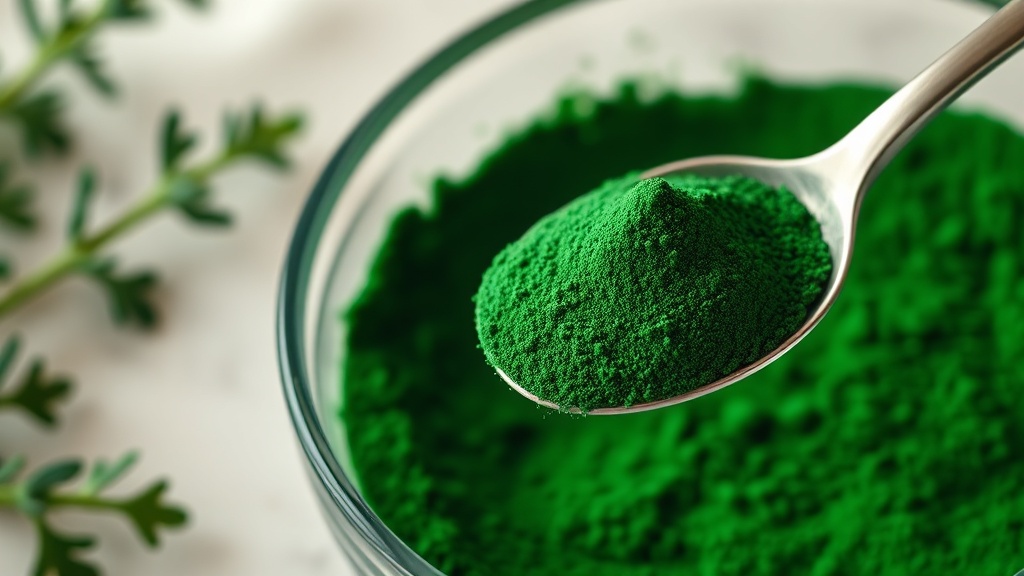
Typical therapeutic doses in clinical trials range from 1 to 8 g/day, with most studies using 3 g/day in divided doses. We recommend starting at 500 mg once daily and increasing by 500 mg every three days to minimise gastrointestinal side effects. The form matters: tablets may have lower bioavailability than powder due to compression, though no head-to-head data exist. We prefer powder mixed into acidic beverages (e.g., citrus juice) to enhance phycocyanin stability. Quality markers are critical: spirulina can accumulate heavy metals (arsenic, lead, mercury) if cultivated in contaminated water. We advise sourcing products with a certificate of analysis (COA) confirming heavy metal levels below USP limits (lead <1 ppm, arsenic <1 ppm, mercury <0.1 ppm). Additionally, phycocyanin content should be assayed; a minimum of 10% phycocyanin by weight is a reasonable quality indicator. We recommend products tested for microcystins (cyanotoxins) by HPLC, as some spirulina products have been found contaminated with hepatotoxic microcystins (Gilroy et al., 2000, PMID 11031576).
Drug Interactions and Contraindications
Beyond anticoagulants and MAOIs, spirulina may interact with immunosuppressants due to its immunostimulatory effects, though evidence is limited. We advise caution in transplant recipients. In patients with hyperuricemia or gout, spirulina's nucleic acid content (approximately 4% RNA) may increase uric acid levels; a study by Chamorro et al. (1996) found a modest rise in serum uric acid in healthy volunteers (PMID 8737562). We recommend avoiding spirulina in patients with a history of gout or kidney stones. Phenylketonuria is an absolute contraindication as noted. Pregnancy and lactation: limited safety data exist; we advise avoiding high doses (>3 g/day) until more evidence is available.
Sourcing and Quality Markers
We emphasise that not all spirulina is equal. Hawaiian Spirulina Pacifica and other brands from controlled, open-pond systems with low rainfall and high solar radiation tend to have lower bacterial contamination. We recommend products that are certified organic (to minimise pesticide residues) and non-GMO. Third-party testing for aflatoxins and microcystins is essential; we look for a COA from an ISO 17025-accredited lab. The European Food Safety Authority (EFSA) has established tolerable daily intakes for microcystins at 0.04 μg/kg body weight; a typical 3 g serving should contain less than 0.12 μg. We advise readers to contact manufacturers directly for batch-specific COAs.
Frequently Asked Questions
Can spirulina cause liver damage?
Rare cases of hepatotoxicity have been reported, likely due to microcystin contamination. With quality-controlled products, the risk is minimal. We advise monitoring liver enzymes if symptoms develop.
Is spirulina safe for children?
Doses up to 2 g/day have been used in paediatric studies (age 6–12) without significant adverse effects. We recommend starting at 250 mg daily and consulting a paediatrician.
Can spirulina cause allergic reactions?
Yes, particularly in individuals with shellfish or iodine allergy. Symptoms include rash, itching, and swelling. Discontinue if any allergic symptoms appear.
Does spirulina interact with thyroid medication?
Spirulina contains iodine (approximately 5 μg/g), which may interfere with thyroid function in susceptible individuals. We advise monitoring TSH if used concurrently with levothyroxine.
Can spirulina be taken with blood pressure medication?
Spirulina has shown modest blood pressure-lowering effects in some trials. We recommend monitoring blood pressure closely, as additive effects may occur with antihypertensives.
What is the maximum safe dose?
Long-term studies have used up to 8 g/day for 6 months without serious adverse effects. We generally recommend not exceeding 5 g/day without medical supervision.
Where to try it. If you want to source what we have described in this article, a clean-label Spirulina option is the option we point readers to. This site is published by Vitadefence Ltd; we disclose that here.