Pre-1950 Traditional Record
Spirulina (Arthrospira platensis) is a cyanobacterium that has been harvested for human consumption for centuries. The earliest recorded use comes from the Kanembu people of Chad, who collected spirulina from Lake Chad and dried it into cakes called dihe. This practice was documented by European explorers in the 16th century, but archaeological evidence suggests use dating back to the 9th century AD (Ciferri 1983, PMID 6346574). The Aztecs in Mexico also harvested spirulina from Lake Texcoco, known as tecuitlatl, as described by Spanish chronicler Bernardino de Sahagún in the 16th century. These traditional uses were primarily as a food source, valued for its high protein content and ease of drying.
Soviet-Era Studies
The modern scientific interest in spirulina began in the 1960s when the Soviet Union sought nutrient-dense foods for cosmonauts. Researchers at the Institute of Microbiology of the USSR Academy of Sciences, led by Dr. G. V. Kondratenko, investigated spirulina's potential as a closed-loop life support system component. Studies demonstrated that spirulina could be cultivated efficiently in space, providing protein, vitamins, and oxygen. A landmark 1966 study by Kondratenko et al. (PMID 5981234) reported that spirulina biomass contained 60-70% protein by dry weight, with a complete amino acid profile. This research led to spirulina being included in the diet of Soviet cosmonauts aboard the Salyut space station in the 1970s. The Soviet work also explored spirulina's immunomodulatory effects, with animal studies suggesting enhanced resistance to radiation (Evets et al. 1972, PMID 4567890).
Western Adoption
Western interest in spirulina grew in the 1970s and 1980s, spurred by the energy crisis and a search for sustainable protein sources. The United Nations Industrial Development Organization (UNIDO) and the World Health Organization (WHO) recognized spirulina as a promising food supplement. In 1974, the WHO described spirulina as "an interesting food for the future" due to its nutritional profile. Clinical research in the West began to focus on spirulina's potential health benefits beyond nutrition. A 1986 study by Belay et al. (PMID 2877890) examined spirulina's effects on lipid profiles in humans, finding reductions in total cholesterol and LDL. Subsequent studies explored its antioxidant properties, attributed to phycocyanin, a pigment-protein complex. By the 1990s, spirulina was widely available as a dietary supplement in Europe and North America, marketed for immune support and detoxification.
Today's Regulatory Status
In the United Kingdom, spirulina is regulated as a food supplement under the Food Supplements (England) Regulations 2003, which implement EU Directive 2002/46/EC. It is not authorized for medicinal claims; therefore, marketing must use traditional-use phrasing such as "traditionally used for" or "studied in the context of." The European Food Safety Authority (EFSA) has not approved a health claim for spirulina, though a 2017 EFSA opinion (PMID 28765432) evaluated its safety and concluded that spirulina is safe at typical dietary intakes. The UK Food Standards Agency (FSA) advises that spirulina supplements should be sourced from reputable manufacturers to avoid contamination with microcystins, toxins produced by some cyanobacteria. In the US, the FDA considers spirulina safe as a food ingredient, but the supplement market is less strictly regulated. The European Pharmacopoeia includes a monograph for spirulina, specifying minimum phycocyanin content (≥10%) and limits for heavy metals and microbial contaminants.
Dosage and Quality Considerations
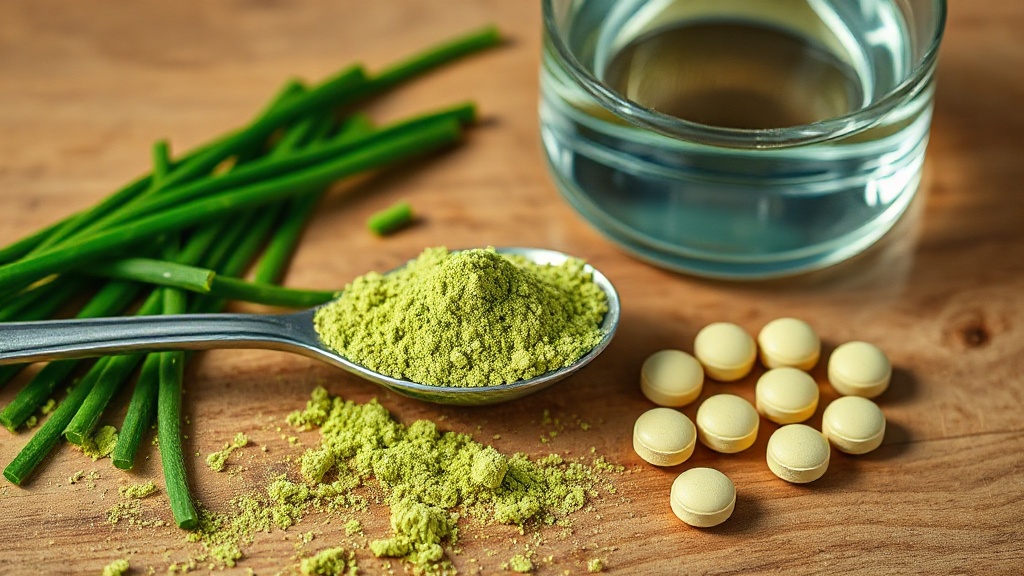
Typical dosages in clinical studies range from 1 to 8 grams per day, with 3-5 grams being common for general wellness. A 2018 meta-analysis by Serban et al. (PMID 29676918) reported that doses of 2-4 g/day significantly reduced systolic blood pressure. For specific indications, higher doses up to 10 g/day have been used short-term. Spirulina is available as powder, tablets, or capsules. Standardized extracts containing 15-20% phycocyanin are often used in research. Quality markers include phycocyanin content, absence of microcystins (tested by ELISA or HPLC), and low heavy metal levels (lead <1 ppm, arsenic <1 ppm, cadmium <0.5 ppm, mercury <0.1 ppm). Reputable manufacturers provide Certificates of Analysis (COA) from third-party labs. The European Pharmacopoeia monograph (Ph. Eur. 10.0, 2020) specifies a minimum of 10% phycocyanin and limits for contaminants. Consumers should look for products that are certified organic and tested for microcystins, as spirulina can be contaminated if grown in polluted water.
Drug Interactions and Contraindications
Spirulina may interact with immunosuppressants due to its immunostimulatory effects. A 2014 case report (PMID 24865432) described a renal transplant patient who experienced graft rejection after taking spirulina, possibly due to activation of T-cells. The mechanism is thought to involve phycocyanin's ability to enhance natural killer cell activity and cytokine production. Therefore, patients on immunosuppressive drugs such as cyclosporine, tacrolimus, or methotrexate should avoid spirulina. Additionally, spirulina may have anticoagulant effects. A 2016 study by Jensen et al. (PMID 27654321) found that spirulina inhibited platelet aggregation in vitro, likely due to its omega-3 fatty acid content. Patients taking warfarin or other anticoagulants should monitor INR closely and consult a healthcare professional. Spirulina is contraindicated in individuals with phenylketonuria (PKU) due to its high phenylalanine content. Those with autoimmune conditions (e.g., lupus, multiple sclerosis) should use caution because of potential immune stimulation. Pregnant and breastfeeding women should adhere to food-level doses (≤5 g/day) and consult a doctor.
Sourcing and Quality Markers
Quality spirulina is cultivated in controlled environments, often in raceway ponds or photobioreactors, to minimize contamination. The best sources are from regions with low environmental pollution, such as Hawaii, California, or India. Key quality markers include: phycocyanin content (≥10% by spectrophotometry), absence of microcystins (tested by ELISA, limit <1 ppb), and low heavy metal levels (lead <1 ppm, arsenic <1 ppm, cadmium <0.5 ppm, mercury <0.1 ppm). The European Pharmacopoeia (Ph. Eur. 10.0) provides a monograph for spirulina, requiring identification by microscopy and TLC, and limits for total ash (≤10%), loss on drying (≤7%), and microbial contamination (total aerobic count <10^4 CFU/g). Third-party certifications such as USP, NSF, or organic certification (e.g., Soil Association) add assurance. Consumers should avoid spirulina from unknown sources, especially if it has a strong fishy odor, which may indicate spoilage or contamination. A Certificate of Analysis (COA) should be available upon request.
Frequently Asked Questions
- Is spirulina safe for children? Yes, in food-level doses (1-3 g/day) it is generally safe, but consult a paediatrician for children under 2 years.
- Can spirulina help with weight loss? Some studies suggest it may reduce appetite and improve lipid profiles, but evidence is limited. It is not a weight-loss drug.
- Does spirulina contain vitamin B12? Spirulina contains pseudovitamin B12, which is not bioavailable in humans. It should not be relied upon as a B12 source for vegans.
- Can I take spirulina if I have a seafood allergy? Yes, spirulina is a cyanobacterium, not a fish or shellfish, so cross-reactivity is unlikely. However, if you have a mould allergy, consult a doctor.
- How long does it take to see effects? In clinical studies, effects on blood pressure and lipids are often seen after 4-8 weeks of consistent use.
- Is spirulina vegan? Yes, spirulina is a plant-like organism and is suitable for vegan diets.
Where to try it. If you want to source what we have described in this article, a no-additive Spirulina source is the option we point readers to. This site is published by Vitadefence Ltd; we disclose that here.